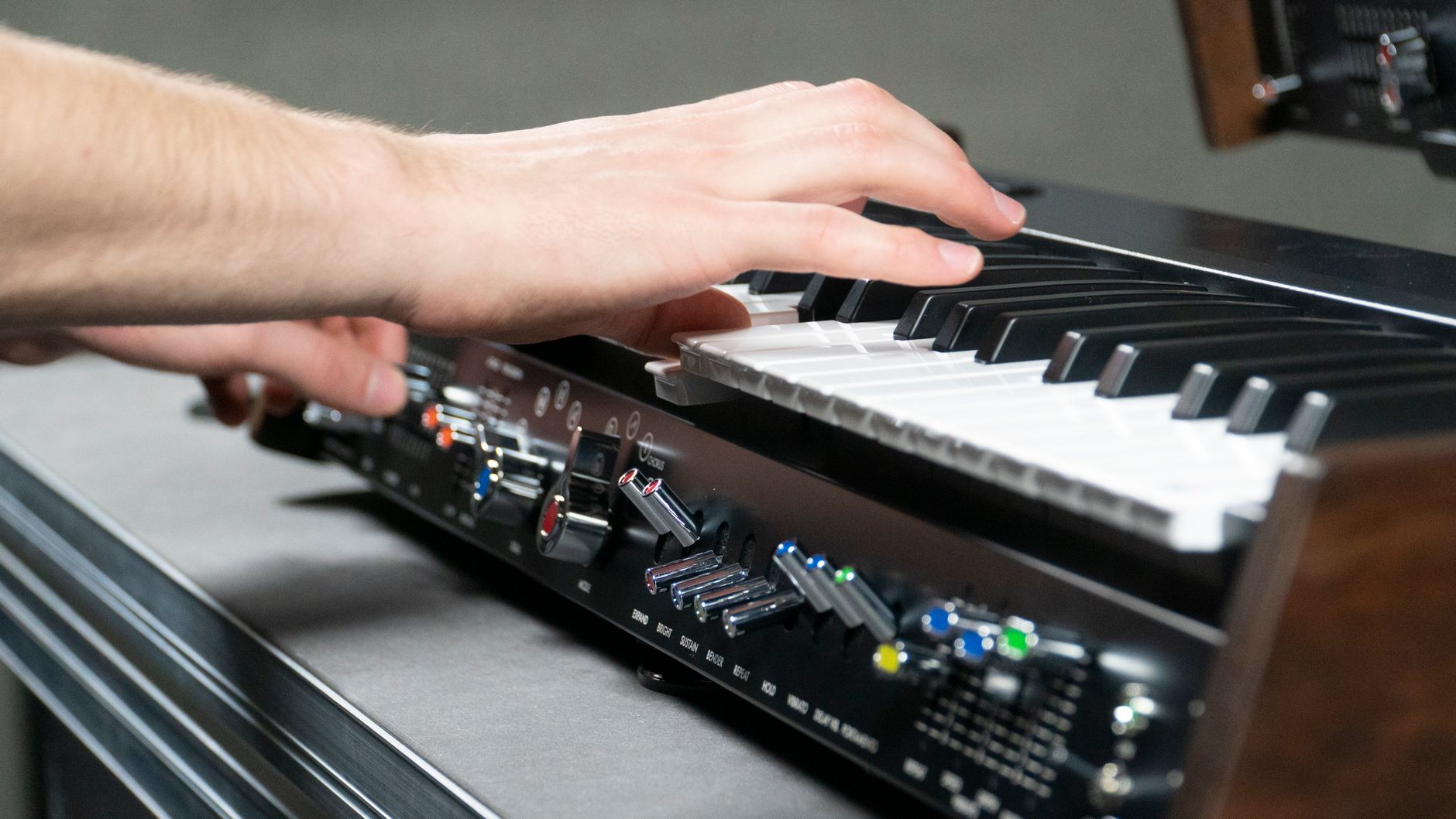
The Telepathic Instruments Orchid is a delightfully retro and approachable hipster synth designed to recapture the magic of vintage electric chord organs. In 2017, a writer bought an old Magnus chord organ off Craigslist for $10, finding the experience of playing full chords with a single button press to be an ideal way for aspiring singer-songwriters to sketch out ideas at home. While digital keyboards largely replaced these parlor instruments in the 1980s, the Orchid brings that simplicity back to the modern era with distinct digital enhancements.
A nod to the past with modern flexibility
Designed in collaboration with Kevin Parker of Tame Impala, the Orchid features a brown-and-tan aesthetic that harks back to 1960s instruments like the Magnus and Bontempi. The speaker grill even mimics the fan vents on those classic models. However, unlike its mechanical predecessors, the Orchid is entirely digital and capable of theoretically playing any chord in any voicing from any scale.
The device includes a one-octave keyboard and a set of buttons to the left that correspond to chord types. Pressing a key and a button combination, such as C and Major, produces a specific chord voicing. This setup allows songwriters to focus on their lyrics and melody without needing to master complex fingering or extensive music theory. The Orchid can lock into a specific key, ensuring that almost any played progression will sound decent and in tune, which helps expand a user’s sonic palette with minimal frustration.
While the Orchid offers a broader palette than an old-school accordion, its design choices create a specific workflow. The keyboard itself only plays single notes, meaning a user cannot play a Dm13 chord directly on the keys; all chord voicings must be selected via the dedicated buttons. This limitation stands in contrast to vintage chord organs, which often had dedicated buttons for specific chords alongside a full keyboard for other notes. The unit also lacks a traditional synth interface for sound design, requiring users to purchase the $99 Pistil virtual synth software to create custom patches or tweak existing ones.
Related: Smart Scale Built for GLP-1 Users Raises Questions
Sounds, patterns, and a drum machine
Built into the Orchid are three distinct synth engines: a virtual analog, an FM synth for bell-like tones, and a reed piano for Wurlitzer-style sounds. There are 70 presets covering most sonic bases, though direct sound manipulation on the hardware is limited to adjusting filter cutoff or effect intensity. The unit also features a dedicated bass section with 12 sounds, ranging from low electric piano octaves to Moog-style synth bass and tuned 808s.
The accompaniment options add another layer of complexity. The Orchid includes strum, harp, and arpeggiator modes, plus 13 preprogrammed patterns. A “slop” performance mode introduces random timing imperfections to approximate human playing. It also houses a drum machine inspired by 1970s rhythm machines like the Korg Mini Pops. While users cannot program custom beats or tweak the sounds, the built-in audio looper allows for recording chord progressions, basslines, and melodies separately to add flexibility.
At $649, the Orchid is a specialized tool rather than a versatile synth. It lacks the polyphony to handle multiple chords simultaneously and cannot replicate the chord voicings found on a traditional piano keyboard. However, for a singer-songwriter seeking to move away from standard acoustic guitar or upright piano clichés, the device offers an accessible electronic alternative for songwriting and jamming. [1]4K gaming monitors provide different visual fidelity for video editors, whereas the Orchid focuses on audio texture.
