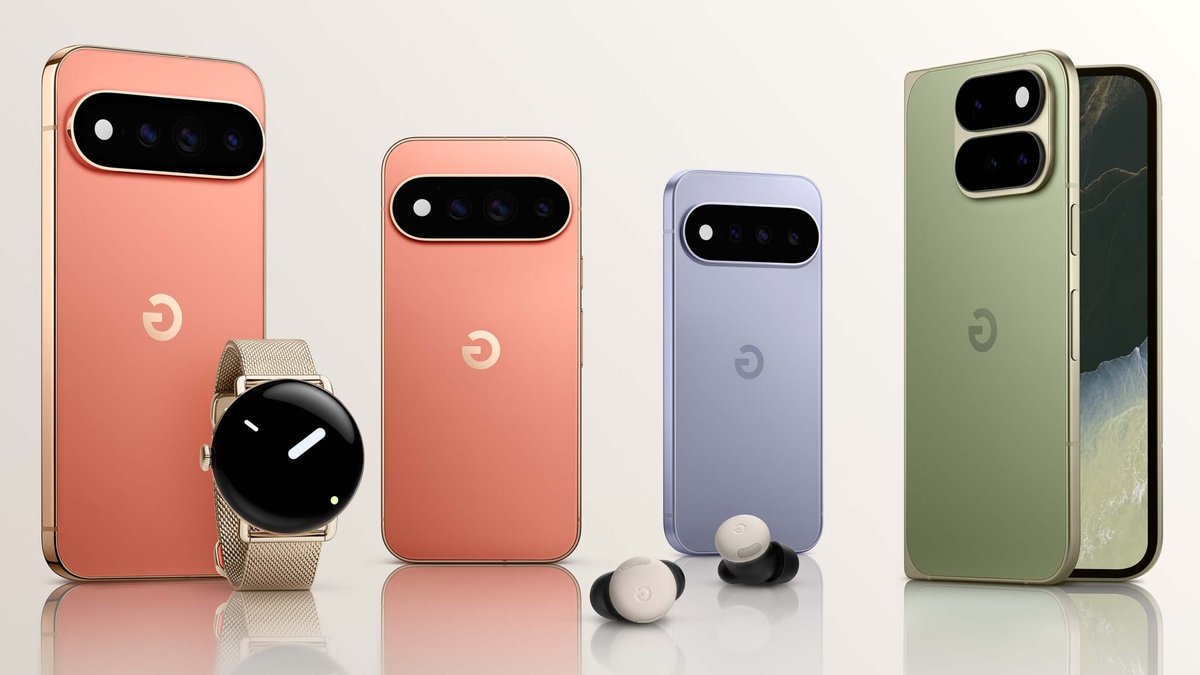
The Google Pixel 11 supports Dual SIM Dual Active (DSDA) technology, allowing users to run two SIM cards simultaneously—with both capable of handling calls and data at the same time. This functionality is particularly valuable for individuals who frequently switch between personal and professional communication without interruption. In regions where DSDA is enabled, the device can maintain an active voice call on one SIM while simultaneously accessing mobile data on the other, eliminating the need to pause one service to use the other. However, in Canada, this feature remains unavailable despite the Pixel 11’s hardware being fully capable of supporting it.
Carriers limit Pixel 11 to Dual SIM Dual Standby
Instead of DSDA, Canadian carriers have configured the Pixel 11 to operate in Dual SIM Dual Standby (DSDS) mode. This means only one SIM can be active at a time for data or voice calls, while the other remains on standby. When a call is placed or received on one line, the second SIM’s data connection is temporarily suspended until the call ends. The restriction applies even if both SIMs are from the same carrier, as the limitation is enforced at the network level rather than the hardware level.
Fido’s FAQ explains the limitation: “Both lines can support data plans; however, one number at a time can use cellular data.” While text messages can still be sent and received on both lines simultaneously, the inability to use data on one SIM while a call is active on the other creates a noticeable gap in functionality. For example, a user on a business call would be unable to check emails or use navigation apps tied to their personal SIM’s data plan until the call concludes.
The difference matters most for users who juggle work and personal lines on the same device. With DSDA, someone could take a call on one line while browsing the web using the other’s data plan, maintaining productivity without disruption. DSDS forces a manual choice—either switch to the other SIM or wait until the call ends, which can be inconvenient during time-sensitive tasks. The limitation also affects travelers who rely on local SIMs for data while keeping their primary number active for calls, as they must constantly toggle between lines rather than using both seamlessly.
Reddit user u/djbeck811 noted that a workaround exists: pairing SIMs from different carriers, like Bell and Rogers. This approach leverages the fact that each carrier operates on distinct frequency bands, allowing the device to maintain separate connections to both networks. While this doesn’t enable full DSDA, it can reduce some of the friction by preventing complete deactivation of the secondary SIM during calls. For instance, if a call is active on a Bell SIM, a Rogers SIM might still maintain a data connection if the networks don’t overlap in a way that forces a full standby state. However, the solution isn’t seamless, as performance can vary depending on network congestion, signal strength, and the specific bands in use. Additionally, this workaround requires users to subscribe to two separate carriers, which may not be cost-effective or practical for everyone.
Related: Canada Sees Rise in Battery Fires
Why Canada’s carriers haven’t enabled the feature
No official explanation has been given for the restriction, leaving users to speculate about the underlying reasons. The Pixel 11’s hardware is identical across regions, meaning the limitation is not due to a lack of technical capability. Instead, carrier policies or network configurations appear to be the primary obstacles. Similar restrictions have affected other devices in the past, often tied to how carriers manage spectrum allocation or billing systems. For example, some networks may prioritize voice traffic over data to ensure call quality, which could conflict with DSDA’s simultaneous operation. Alternatively, carriers might be concerned about potential billing complexities, such as accurately tracking data usage when two SIMs are active at once.
Another possibility is that Canadian carriers have not yet updated their infrastructure to support DSDA, despite the hardware being ready. Network upgrades can be costly and time-consuming, and carriers may be prioritizing other initiatives over enabling this feature. Regulatory factors could also play a role, as spectrum licensing in Canada is subject to strict rules that may not align with the technical requirements of DSDA. Without transparency from carriers or Google, the exact cause remains unclear, leaving users with no clear path to resolution.
For most users, the absence of DSDA won’t be noticeable, as many people rely on a single SIM or use dual SIMs primarily for messaging and occasional calls. Those who rely on dual SIMs for travel or work-life separation, however, are the ones left frustrated. The feature is already functional in other markets, such as the United States and parts of Europe, making its absence in Canada feel like an unnecessary compromise. Users in these regions can take full advantage of the Pixel 11’s capabilities, while Canadian consumers are left with a less flexible solution.
It’s possible carriers could enable DSDA in the future, particularly if demand grows or competing devices begin offering the feature. However, for now, Pixel 11 owners in Canada are stuck with DSDS. The workaround of mixing carriers might help in some scenarios, but it’s not a true fix—and it won’t work for everyone, especially those who prefer to consolidate their plans under a single carrier. Until carriers address the limitation, users will need to adapt to the constraints of DSDS or explore alternative solutions, such as using a secondary device for one of their lines.
Google hasn’t commented on the issue, leaving users to speculate whether the limitation stems from technical, regulatory, or business decisions. The company’s silence suggests that the block is likely carrier-driven rather than a hardware or software limitation imposed by Google itself. Until carriers provide clarity or adjust their policies, the Pixel 11’s dual SIM capabilities remain a half-measure north of the border, offering only a fraction of the functionality available elsewhere.
