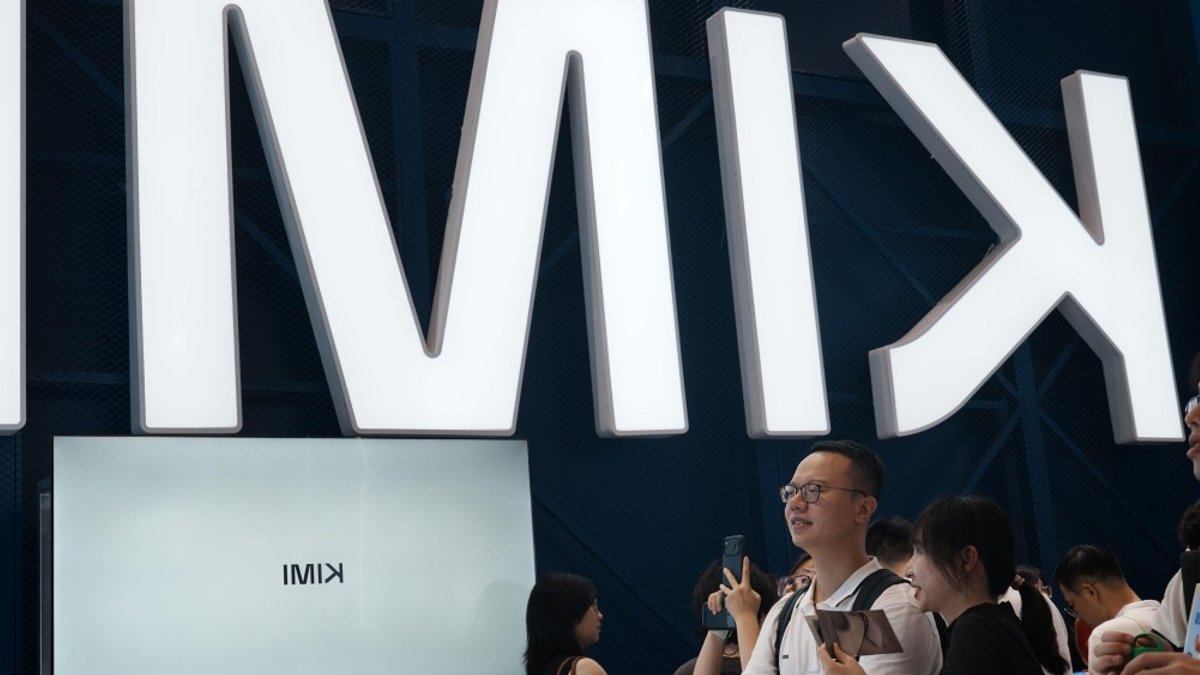
Last week, two Chinese AI firms announced flagship models that they say can compete with the leading offerings from OpenAI and Anthropic, prompting a swift reaction across markets and policy circles.
New Chinese models challenge U.S. dominance
Beijing‑based Moonshot AI introduced Kimi K3, pricing it at $15 per million output tokens—about half the cost of OpenAI’s GPT‑5.6 Sol and significantly cheaper than Anthropic’s Claude Fable 5. Within hours, demand overwhelmed its subscription system, so the company paused new sign‑ups.
A day later, Alibaba previewed Qwen 3.8, describing it as “one of the most powerful models available today” and ranking it just behind Fable 5. Both firms said the models would be released as open weight, allowing developers to download and modify the core training values.
Open weight contrasts with the closed, proprietary stance of most U.S. labs, including OpenAI and Anthropic. That difference could influence how quickly developers adopt the new Chinese tools, especially given the price gap.
Related: FCC to ban disguised DJI gadgets
Economic and strategic implications
Some U.S. startups have already turned to Chinese alternatives to curb rising costs, a trend that could broaden if the performance gap continues to close. Analysts note that the valuation of U.S. AI firms often hinges on expectations of market dominance; any shift in demand could pressure margins and growth forecasts.
Security concerns also surface. Open Chinese models could be accessible to a wider range of users, including organizations that are blocked from U.S. services.
Investors watch closely.
The reality that Chinese firms now regularly produce models capable of challenging U.S. leaders should temper the surprise that greeted the recent launches. For many companies, the decision will come down to cost versus performance, and whether an open‑weight model fits their risk profile.
Related: Smart Scale Built for GLP-1 Users Raises Questions
From a practical standpoint, the emergence of affordable, high‑performing Chinese AI could mean smaller firms no longer need to allocate large budgets for cloud‑based inference. They might be able to run sophisticated workloads on modest hardware, freeing capital for other growth initiatives.
Yet the full capabilities of Kimi K3 and Qwen 3.8 remain unverified, as neither model has been fully released for independent testing. Companies’ benchmark claims should therefore be treated with caution, even though there is little evidence of systematic misrepresentation.
Overall, the pattern suggests that Chinese AI labs are no longer occasional disruptors but recurring participants in the global race for advanced models. The industry’s response should shift from treating each new Chinese release as a shock to evaluating them as part of an ongoing competitive field.
