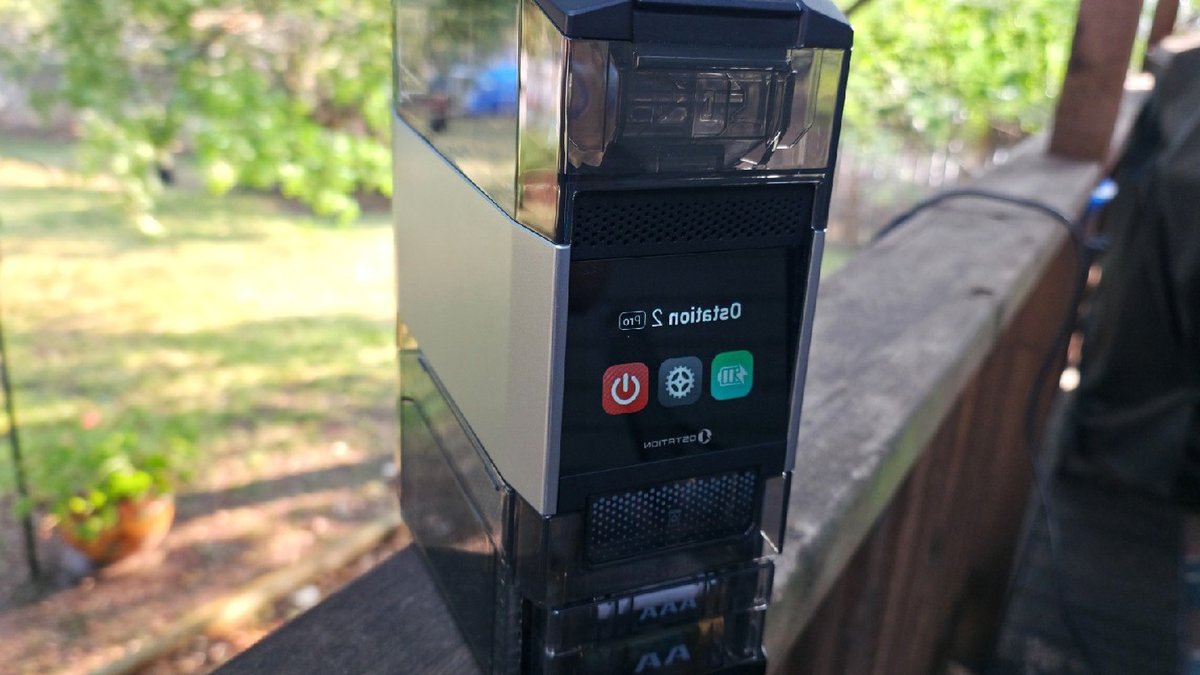
Olight’s new Ostation 2 Pro aims to streamline the process of keeping AA and AAA batteries charged for retro gaming setups. The device combines a battery charger, tester, and storage unit into a single unit that retails for $140. It uses gravity to move batteries from a charging slot to a drawer, automatically dropping in two charged batteries whenever there is space. This system allows for up to four batteries to charge simultaneously, with the remaining 20 waiting in a large holding area until they are needed. This consolidation helps maintain a tidy desk environment, especially for enthusiasts who value organization.
One Dock for Your Devices and Batteries
The Ostation 2 Pro isn’t just a charging station; it functions as a dock for two Olight flashlights. This feature extends the device’s utility beyond simple battery management, offering a centralized hub for gaming peripherals and lighting. The unit weighs just under 3 pounds and measures about 9 inches tall, making it a substantial piece of hardware that takes up a noticeable amount of desk space. For gamers who rely on rechargeable batteries for controllers, handheld consoles, and flashlights, this consolidation can significantly reduce the clutter of scattered chargers and loose batteries. [1]Affordable gadgets like this can also help transform a home office space.
While the system can accommodate a total of 24 batteries, the charging process is not simultaneous. The user must manually remove batteries from the output drawer to trigger the gravity-fed drop of the next two charged cells. This design prioritizes immediate availability over high-speed charging, ensuring that a user always has a fresh pair ready to grab without needing to wait for the entire batch to finish. It’s a trade-off that suits a specific workflow where access to power is more important than raw charging speed.
Related: Pimax Dream Air Review: The New Svelte Prince Of Desktop VR Headsets
Smart Detection and Compatibility
One of the device’s standout features is its ability to identify and reject damaged or incompatible cells. Batteries can be loaded into the charger facing either direction, as the unit automatically detects the positive terminal. Before beginning the charge cycle, the Ostation 2 Pro runs a diagnostic check. If it identifies a problem, the battery is routed to a separate rejection bin. During testing, the unit successfully identified a defective battery included in the package, a feature that prevents the potential hazards of overcharging a damaged cell.
The charger uses a layered system of protection to prevent overcharging, overheating, and short circuits. It adjusts charging parameters based on the specific battery type and current temperature. The device primarily supports Olight’s proprietary lithium-ion cells, but it also accepted third-party Ni-MH rechargeable batteries, such as Amazon Basics. Conversely, standard alkaline and non-rechargeable lithium-ion batteries were rejected, which is expected behavior for a smart charging station. However, the device is not fully universal; it will likely reject other brands of rechargeable lithium-ion batteries that do not match Olight’s specific chemistry.
Users can monitor the charging status through a touchscreen display and a companion app. The app provides detailed feedback on the charging process, which adds a layer of control for those who want to track their battery health. Charging times varied depending on the battery type, with Ni-MH AAA batteries charging faster than AA lithium-ion cells. The unit operates continuously, cycling through the queue of batteries until they are all charged, though it will not attempt to recharge a battery that has already been fully charged and removed.
