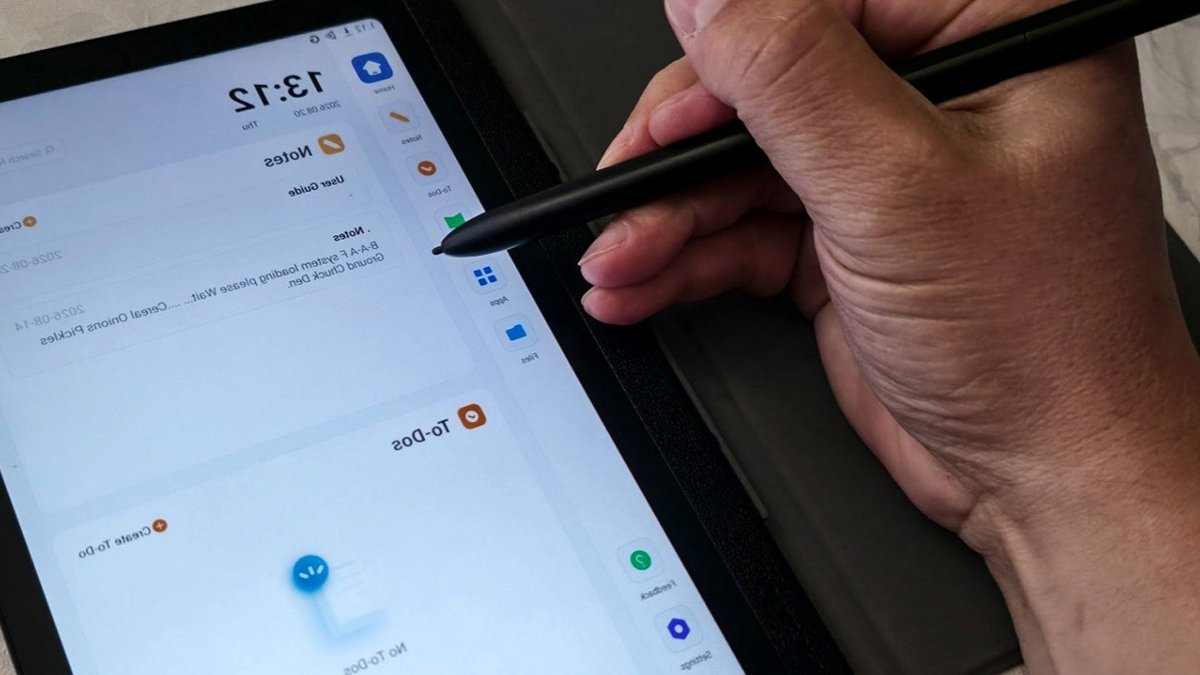
The Huion Note E arrives at a price of $369, positioning it between budget e‑readers and premium tablets while promising a paper‑like note‑taking experience.
Design that mimics a notebook
Built with a magnetic cover that flips open like a traditional pad, the unit powers on automatically when the lid is lifted. A single button doubles as a fingerprint sensor, letting users unlock the screen without a PIN.
The stylus magnetically snaps to the side, eliminating the need for a separate holder. Its ridged edge and textured display surface aim to reproduce the feel of writing on paper, a claim the reviewer found credible after daily use.
With a 1920 × 1200 resolution, 270 PPI density, and a 60 Hz refresh rate, the screen can render 16.7 million colors. The display is LCD rather than E‑ink, which the manufacturer says yields a clearer, more responsive view for reading.
Writing and sketching workflow
Handwriting recognition works instantly in Google Keep, even with the reviewer’s notoriously poor script. The device also runs the Kindle app, delivering color book pages that stand out against monochrome e‑ink rivals.
Related: Pimax Dream Air Review: The New Svelte Prince Of Desktop VR Headsets
The battery‑free stylus, labeled PenTech 3.0, features replaceable felt nibs and an eraser tip. Pressure sensitivity reaches 8,192 levels, and tilt detection further refines line work, making the tool suitable for both quick doodles and detailed illustration.
In practice, the reviewer noted no accidental marks when resting a hand on the screen, a problem that has plagued other drawing tablets. The lack of a dedicated volume rocker required a settings adjustment, but earbuds mitigated the inconvenience.
Comparing this to earlier Android‑based e‑notebooks, the Huion Note E feels more like a hybrid between a dedicated sketchpad and a conventional tablet. While older models often sacrificed pen responsiveness for lower cost, this unit balances price and performance, echoing a trend where niche devices aim for broader appeal.
Software environment and app support
Google Play is pre‑installed, granting access to a full range of apps. The reviewer tested Keep Notes and Kindle, reporting performance comparable to a phone of similar size.
File transfer between the device and a companion phone proved seamless, supporting productivity on the go. The fingerprint reader never failed during the trial period, and the soft‑light screen caused no noticeable eye strain even after extended sessions.
Related: Canada Sees Rise in Battery Fires
Value proposition compared with competitors
The Boox Note Air5 C, a 10.3‑inch rival, sells for roughly $530 and adds features such as a larger canvas and additional sensors. For users who need a more portable solution, the Huion’s 8.4‑inch form factor may be preferable.
The Viwoods Aipaper Mini, priced near $344, lacks many of the Huion’s capabilities, including the high‑resolution LCD and robust stylus. Meanwhile, the latest iPad mini starts at about $570 and, while powerful, does not focus on handwriting comfort to the same degree.
Ultimately, the decision hinges on whether a user values a dedicated note‑taking device over a multipurpose tablet. For those who frequently capture ideas in meetings or sketch on the move, the Huion Note E offers a blend of features that fill the gap left by smartphones.
Based on hands‑on testing, the reviewer recommends the Huion Note E as a worthwhile investment for writers, artists, and anyone seeking a digital notebook that feels like paper without breaking the bank.
